Debt Consolidation
How to Use Home Equity to Pay Off Credit Card Debt

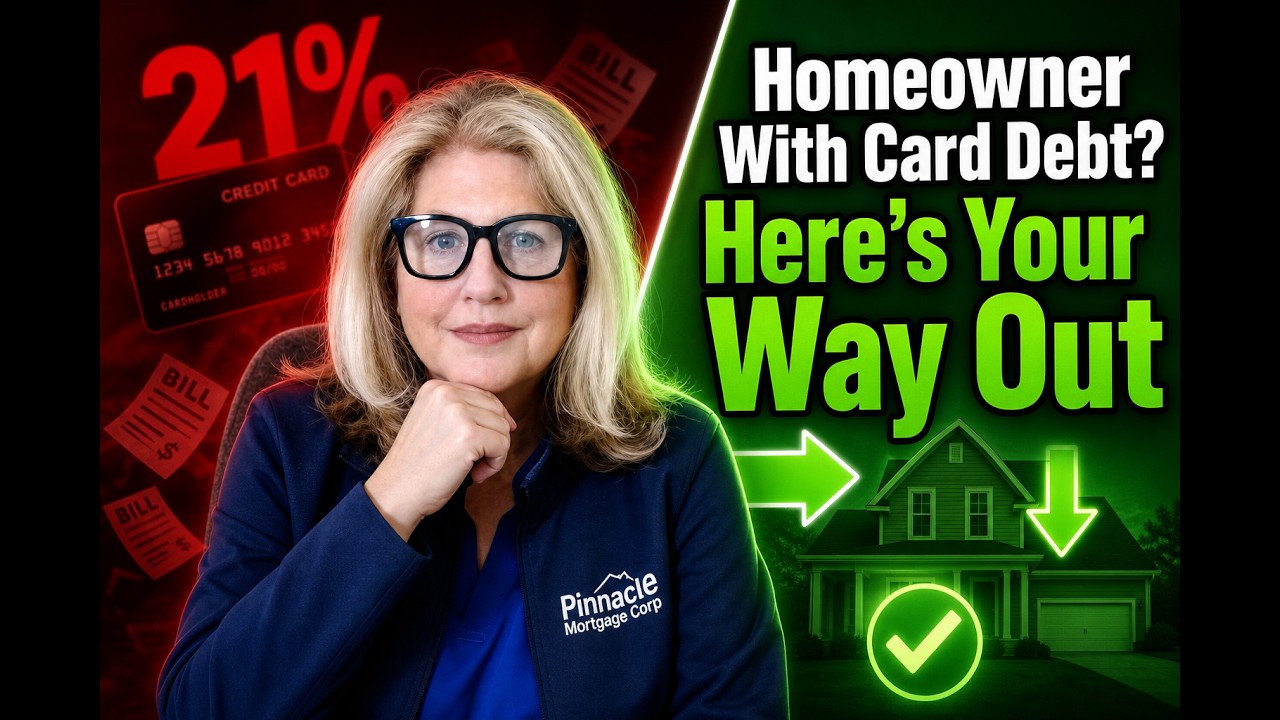
How can I use home equity to pay off credit card debt?
Homeowners can use a home equity loan, a HELOC (Home Equity Line of Credit), or a cash-out refinance to pay off high-interest credit card debt. Each option lets you borrow against the equity in your home at a significantly lower interest rate than credit cards typically charge. The key trade-off is that you are converting unsecured debt into secured debt backed by your home, so you must be confident in your ability to make the new payments and committed to changing spending habits.
The Direct Answer: How Can You Use Home Equity to Pay Off Credit Card Debt?
Homeowners can use a home equity loan, a HELOC (Home Equity Line of Credit), or a cash-out refinance to pay off high-interest credit card debt. Each option lets you borrow against the equity in your home at a significantly lower interest rate than credit cards typically charge. The key trade-off is that you are converting unsecured debt into secured debt backed by your home, so you must be confident in your ability to make the new payments and committed to changing the spending habits that created the debt.
Why Is Credit Card Debt So Hard to Pay Off?
Americans are carrying over $1.25 trillion in credit card debt, and the average interest rate on those balances hovers around 21%. That number sounds bad on its own, but here is what it actually looks like in practice.
On a $5,000 balance with a typical minimum payment, the vast majority of each payment goes straight to interest. Only a small fraction actually reduces what you owe. If you only make minimum payments, it can take over two decades to pay off a $5,000 balance. You will end up paying thousands in interest on top of the original amount.
This is what is known as the minimum payment trap. Credit card companies designed the system so you pay slowly. They are not rooting for you to pay it off fast. The Consumer Financial Protection Bureau (CFPB) explains how minimum payments are calculated and why they keep borrowers in debt longer.
What Is Tappable Home Equity and Why Does It Matter?
Your home equity is the difference between what your home is worth today and what you still owe on your mortgage. If your home is valued at $400,000 and you owe $250,000, you have $150,000 in equity.
Tappable equity is the portion of that equity you could actually borrow against while still keeping a safe cushion, typically at least 20% equity remaining in your home. According to the Federal Reserve, homeowners collectively hold trillions in home equity, and a staggering percentage of it sits completely untouched.
The average homeowner right now has roughly $200,000 or more in tappable equity. That is money sitting idle while those same homeowners may be paying 21% interest on credit card balances. Understanding this gap is the first step toward making a smarter financial decision.
What Is a Home Equity Loan and Who Is It Best For?
A home equity loan works like a second mortgage. You borrow a lump sum at a fixed interest rate and pay it back over a set period, usually five to thirty years, with a predictable monthly payment.
Home equity loan rates are typically in the single digits, which is a fraction of what credit cards charge. Instead of juggling five cards at different rates above 20%, you consolidate everything into one fixed payment.
This is a strong fit if you: - Have a specific total amount of debt you want to eliminate - Want a predictable, fixed monthly payment - Do not want to worry about your rate changing over time
This may not be right if you: - Already have a very low rate on your primary mortgage and do not want a second monthly payment - Need ongoing access to a revolving credit line rather than a one-time lump sum
The CFPB provides a detailed comparison of how home equity loans work and what to watch for.
How Does a HELOC Work for Debt Consolidation?
A HELOC, or Home Equity Line of Credit, works more like a credit card backed by your home. You get approved for a credit line and only borrow what you need, when you need it. The rate is variable, meaning it can move up or down over time.
HELOC rates have generally been running well below credit card rates. The flexibility is the main advantage. You draw money as needed, pay it back, and the credit line becomes available again.
A HELOC is great for someone who: - Wants to pay off existing debt but also wants access to a revolving line for future needs like home repairs or emergencies - Prefers to borrow only the exact amount needed at any given time
A HELOC may not be ideal if you: - Struggle with credit discipline, because having an open line you can draw from repeatedly creates a real risk of running up new debt on top of old debt - Prefer the certainty of a fixed rate and fixed payment
Be honest with yourself about your spending habits before choosing this option. The Federal Trade Commission outlines consumer protections and risk factors for HELOCs.
What Is a Cash-Out Refinance and How Can It Eliminate Card Debt?
This is the third option, and it is the one that catches many homeowners off guard. With a cash-out refinance, you replace your existing mortgage with a brand-new, larger mortgage and take the difference in cash.
For example, if you owe $200,000 on a $400,000 home, you might refinance to a higher balance and take cash to pay off your credit cards. You end up with one single mortgage payment. No second loan. No separate line of credit.
One client came in with roughly $30,000 spread across four credit cards, paying over $600 per month in minimum payments and barely making a dent. After reviewing her equity and running the numbers, she rolled that entire balance into a cash-out refinance. Her total monthly obligation went down, and instead of four separate bills with four different due dates and four different interest rates above 20%, she had one predictable payment. She called a month later and said it felt like she could finally breathe.
That is what this can do when the numbers line up. Fannie Mae's guidelines outline the requirements for cash-out refinance transactions.
What Are the Risks of Using Home Equity to Pay Off Credit Cards?
This is the part that requires complete honesty. When you use your home equity to pay off credit card debt, you are converting unsecured debt into secured debt. That means your home is now on the line.
If you cannot make the payments on your home equity loan, your HELOC, or your new refinanced mortgage, you could face foreclosure. Credit card debt is stressful, but no one can take your house over it. Once you move that debt onto your home, the stakes change significantly.
Here is the bottom line. If you consolidate your card balances and then spend the next two years running those cards back up, you will be in a worse position than where you started. This strategy only works when it comes with a real commitment to change your spending patterns.
What Three Steps Should You Take Right Now?
Even before you talk to a mortgage professional, you can get your numbers together.
Step 1: Pull up the latest statement for every credit card you have. Write down the balance, the interest rate, and the minimum payment for each one. Add up the total balance and total monthly minimums. That is your starting point.
Step 2: Look up your home's estimated value using your county assessor's website or a major home valuation tool. Subtract what you still owe on your mortgage. That rough number is your estimated equity. If it is more than 20% of your home's value, you likely have tappable equity to work with.
Step 3: Compare those two numbers. If your tappable equity is significantly larger than your total credit card debt, and your income comfortably supports a new payment structure, you are probably a strong candidate for one of these three options.
Write those numbers down and bring them to a conversation with a licensed mortgage professional.
Ready to See If This Strategy Fits Your Situation?
If you are a homeowner carrying credit card debt and want to understand your options, the best next step is a real conversation about your specific numbers. No pressure, no pitch. Book a call here and bring the numbers from the three steps above so we can figure out the right path forward together.
Frequently asked questions
Can I use home equity to pay off credit card debt if I have a low mortgage rate? +
Yes, but your approach matters. If you have a low rate on your first mortgage, a home equity loan or HELOC might make more sense than a cash-out refinance, because those options let you keep your existing mortgage rate intact. A cash-out refinance would replace your current mortgage entirely, which means you would lose that low rate. Talk to a mortgage professional about which structure protects your existing rate while still reducing your credit card costs.
What is the difference between a HELOC and a home equity loan? +
A home equity loan gives you a lump sum at a fixed rate with predictable payments. A HELOC works like a revolving line of credit with a variable rate. You only borrow what you need. The home equity loan is better for a one-time debt payoff, while the HELOC offers more flexibility for ongoing needs. The trade-off is that HELOC rates can change over time, while the home equity loan rate stays locked.
Is it risky to put credit card debt on my home? +
Yes, there is real risk. Credit card debt is unsecured, meaning no one can take your property over it. When you move that debt onto your home through a home equity product, it becomes secured debt. If you fall behind on payments, foreclosure is possible. This is why it is important to be confident in your ability to make the new payments and to address the spending patterns that created the card debt in the first place.
How much equity do I need to qualify for debt consolidation? +
Most lenders require you to maintain at least 20% equity in your home after borrowing. So if your home is worth $400,000, you would need to keep at least $80,000 in equity. Your tappable equity is everything above that threshold. To estimate yours, subtract your mortgage balance from your home's value, then check if the remaining equity exceeds 20% of the home's worth.
Will consolidating credit card debt hurt my credit score? +
It depends on the details, but in many cases it can actually help. Paying off credit card balances reduces your credit utilization ratio, which is a major factor in your score. Opening a new loan or refinance may cause a small, temporary dip from the hard inquiry, but the long-term effect of lower utilization and consistent on-time payments tends to be positive.
What happens if I consolidate my credit cards and then run them up again? +
This is the biggest danger with this strategy. If you roll $30,000 in credit card debt into your mortgage and then spend two years running those cards back up, you will end up with both a larger mortgage and new credit card debt. You will be in a worse position than before. Any consolidation plan should include a commitment to changing the habits that led to the debt.
Sources
- How is the minimum payment on my credit card determined? — Consumer Financial Protection Bureau
- What is a home equity loan? — Consumer Financial Protection Bureau
- Home Equity Loans and Home Equity Lines of Credit — Federal Trade Commission
- Financial Accounts of the United States — Federal Reserve
- Cash-Out Refinance Guidelines — Fannie Mae

About the author
Kathleen Connerty — Loan Officer & Sales Manager, The Connerty Lending Team at Pinnacle Mortgage Corporation
NMLS #401818
I'm Kathleen Connerty, Loan Officer and Sales Manager with The Connerty Lending Team at Pinnacle Mortgage Corporation in Nashua, New Hampshire (NMLS #401818). The lender, you know: I help people who think they can't own a home achieve the American dream. Credentials: NMLS ID 401818; Pinnacle Mortgage Corporation NMLS 1323739; in the mortgage business since 1991; 2025–26 New Hampshire Housing Finance Authority Fellow; licensed in NH, MA, ME, CT, SC and FL Expertise: First-time buyers; NH Housing down payment assistance; FHA, VA, USDA and conventional loans; self-employed borrowers; investor loans; jumbo loans
More about Kathleen →Ready to talk numbers?
Schedule a 15-minute call. We'll walk through your situation and show you what's actually possible — no pressure, no pitch.
Book a call

